
AI-generated summary reviewed by our newsroom.
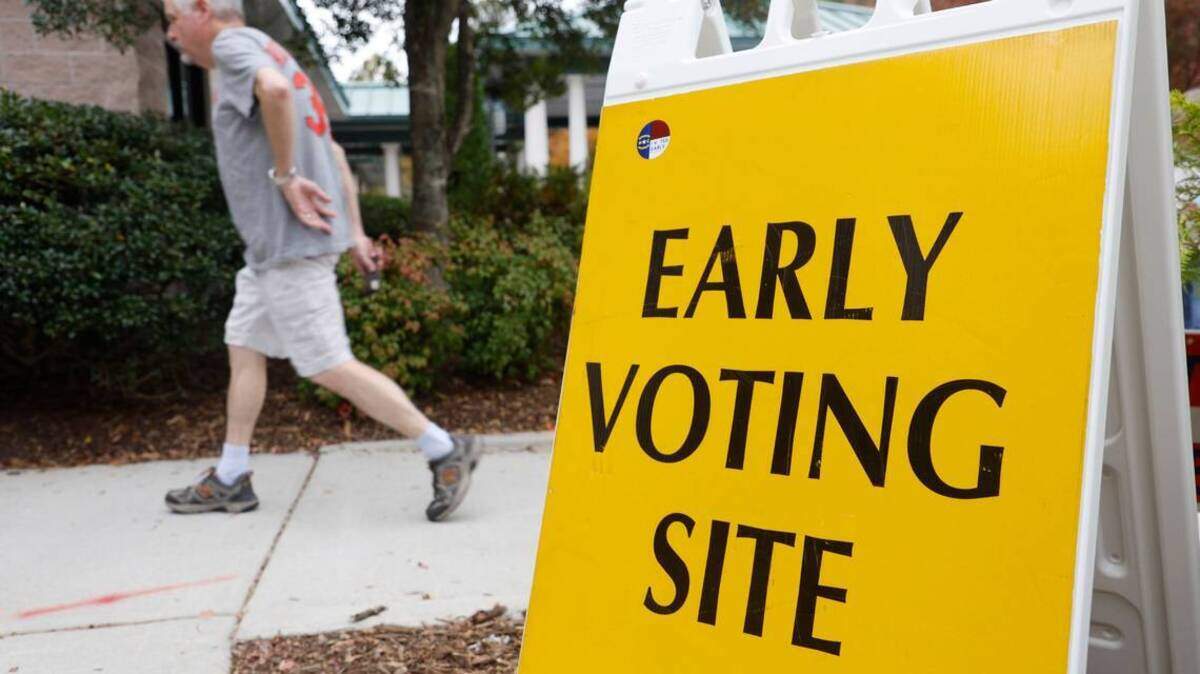
With just about three months to go before Election Day, 20 North Carolina counties have failed to reach an agreement on when and where to open the polls this November.
Read more President Donald Trump sympathizes with insurrectionists in Senate standoff
Those disagreements — which primarily revolve around Sunday voting — now head to the Republican-controlled State Board of Elections, which will decide on a final plan for each contested county later this month.
It comes after months of news reports about Dallas Woodhouse — a former GOP political operative — attempting to influence early voting plans while serving in a new role as “elections liaison” for the State Auditor’s Office, which is responsible for appointing election officials.
Of the 20 counties with non-unanimous votes, 15 disagreed, at least in part, over whether to host early voting sites on Sunday.
Sunday voting has long been a subject of debate in North Carolina. The practice has historically been popular among Black voters, having been featured in “souls to the polls” events in which churchgoers cast their ballots after services. But Republicans have often sought to limit Sunday voting, sometimes citing religious reasons and sometimes financial ones.
Most recently, Woodhouse advised several county election boards to drop Sundays, according to text messages obtained in public records requests.
In one message to a member of the Lee County Board of Elections, Woodhouse wrote that he knew the push to eliminate Sunday would cause public backlash, the News & Observer previously reported.
“We are going to get (expletive) removing Sundays in so many places,” he wrote, going on to suggest that the board add an additional Saturday during the early voting period with expanded hours.
“The overall increase in hours makes it easier to sell plus it is better for voters,” he wrote.
In some counties that split over Sunday voting, including Rockingham and Union, the Republican majority suggested hosting early voting on Saturday instead.
Read more Garner man, 19, charged with murder after stepson dies in bathtub
Woodhouse resigned from the auditor’s office last month. Speaking to The N&O afterward, he said he was confident that the 2026 general election would feature more total voting opportunities than the last comparable election.
In addition to the disagreements over Sunday voting, eight counties split over where to host early voting sites.
In Guilford and Jackson counties, the disagreements stemmed over whether to host early voting sites on the campuses of local universities. The same issue rankled elections officials earlier this year when planning for the primary election, and led to a lawsuit from students who argued that the lack of voting sites on their campuses disenfranchised young and Black voters.
A judge later ruled against the students.
In Granville County, members of the election board split after the Republican majority sought to move sites away from areas where Democrats performed better in the 2024 election.
The 2-2 vote was reached in a heated meeting, in which the board’s Republicans refused to preserve a library polling site even after the county commissioners approved additional funding for that purpose.
Other counties, such as Columbus and Pitt, disagreed over how many sites to approve. Republicans on Columbus’ board initially proposed dropping the number of sites from five to one, but later agreed to a plan with four sites. The Democratic minority voted for a plan with five.
North Carolina’s state and local election boards all consist of three Republicans and two Democrats following controversial legislation passed in 2024 that stripped Democratic Gov. Josh Stein of his appointments to the boards. The GOP-controlled legislature instead transferred those appointments to State Auditor Dave Boliek, a Republican.
The majority and minority plans for each non-unanimous county can be found on the State Board of Elections’ website. Their reasons for disagreeing are included below:
Read more See how research funding levels have changed at UNC, NC State in recent years