
AI-generated summary reviewed by our newsroom.
With the start of football season fast approaching, the issue of athlete eligibility has taken another turn.
Read more Zillow warns Americans on mortgage rates, housing market
The U.S. Court of Appeals for the Tenth Circuit on Friday granted the NCAA’s request for a stay in the Wisne v. NCAA case, which had federal Judge Charlotte Sweeney issue an injunction that granted those athletes in the Class of 2022 a fifth-year of eligibility.
The ruling on a stay in the Tenth Circuit does not affect any of the athletes in separate lawsuits filed in other states. It would affect Seth Trimble, the former North Carolina basketball forward who became eligible under Sweeney’s blanket ruling and then transferred to Louisville.
N.C. State basketball player Ven-Allen Lubin, who recently returned to the Wolfpack program for his fifth season, is not affected. He was among the 52 plaintiffs in a North Carolina lawsuit filed in Guilford County that also includes Darrion Williams and Tre Holoman, who were at N.C. State last season.
Lubin and Williams also joined a state lawsuit in Texas that ended with the court granting a restraining order that made them eligible. Lubin re-signed with the Wolfpack soon after the temporary restraining order. Holloman is also involved with a California complaint.
The NCAA created a new eligibility rule that begins with the 2026-27 school year in which athletes would be able to play five years in a five-year span after they enroll in a school or after their 19th birthday, whichever comes first. The new rule was approved by the Division I board of directors and supported by the Student-Athlete Advocacy Committee.
Athletes in the class of 2022, who had four years of eligibility in a five-year span, were not grandfathered in or given the chance for a fifth season of competition. Class-action lawsuits soon began to be filed, with more than 100 athletes involved in suits in several states, both in state and federal court.
Sweeney issued a restraining order on July 31 in the Wisne v. NCAA lawsuit, making class of 2022 athletes eligible. The NCAA, in turn, appealed the Sweeney ruling and has contested other restraining orders issued in other state cases.
“I think we all knew going in that this could happen,” N.C. State Athletic Director Boo Corrigan said on Friday. “From an overall philosophy standpoint, I think the NCAA, at some point — and we are part of the NCAA — if you’ve gotta do ‘5-for-5,’ you’ve got to put a line in the sand; that this is when it’s gonna start.”
Corrigan was surprised by Sweeney’s initial ruling and programs now must go back and determine where they stand. N.C. State legal counsel will meet with the ACC’s legal counsel, he said.
Despite the uncertainty about pending court decisions involving the NCAA rule, N.C. State, UNC and Duke added fifth-year football players who were hopeful of being eligible.
Read more Hayden Panettiere’s Mom Denies Pressuring Daughter to Work as a Child
Duke, the reigning ACC Champions, added fifth year offensive lineman JT Hill this week. Hill spent one season at Highland Community College, before attending Presbyterian for three. He was an All-Conference standout on the FCS level before signing with the Blue Devils on Thursday. Hill had not been officially added to the roster. It is unclear, according to a Duke spokesperson, whether he is a plaintiff in any other court cases.
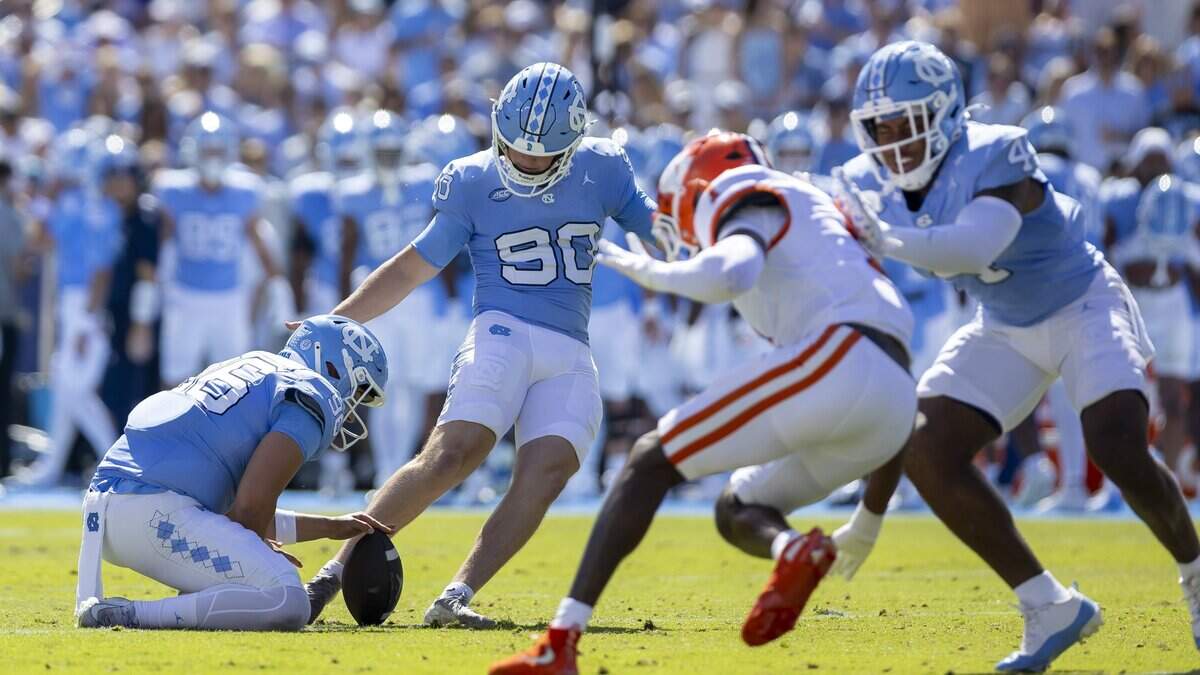
UNC placekicker Rece Verhoff returned to the Tar Heels and has been practicing with the team, but his eligibility now is in question.
“We’ll see how the whole thing with Rece plays out, whether you know he actually is in fact able to participate or not,” UNC coach Bill Belichick said Friday. “And until it is, we really don’t have to take a contingency plan for whatever resolution all that is.”
N.C. State cornerback Jamel Johnson recently rejoined the Wolfpack as part of the blanket ruling by Sweeney.
“We planned on not having Jamel,” N.C. State head coach Dave Doeren said on Friday. “It’s not like, ‘Oh my God, what are we gonna do?’ We knew when we added him that it wasn’t done, so we’ve planned for ‘life with’ and ‘life without. I still don’t know where we’re at. I just found out the same time you guys did. I haven’t talked to our compliance office yet. I have to find that out what this does to us and if this is final or is there another thing coming? I don’t know the answers yet.”
Doeren said it speaks to the state of college athletics. His staff and administrators have regular conversations about the ever-changing decisions.
Program leadership is regularly asking, Doeren said, “What can we do today? What should we do with that information? How long is that going to be real? If it changes, do we really want to do that?”
The stay issued Friday also affects Wolfpack soccer player Drew Lovelace, another fifth-year returnee under the Sweeney ruling. Lovelace was in the lineup Thursday for the Pack’s opener against Coastal Carolina.
In a statement, the NCAA said it will not penalize schools who allowed student-athletes to compete “consistent with the scope of the Wisne injunction prior to the stay being granted.”
The NCAA plans to defend similar lawsuits, including those in which Lubin is a plaintiff.
Read more Iconic fast-food fried chicken chain KFC closes over 300 restaurants
This story was originally published August 21, 2026 at 1:14 PM.