
AI-generated summary reviewed by our newsroom.
Wake County is set to gain 200 new affordable homes, the result of a complex mix of tax credits, city and county loans, and private investment that developers say is becoming essential to meeting the region’s housing needs.
Read more Housing supply may grow after NC Senate passes bill allowing more backyard cottages
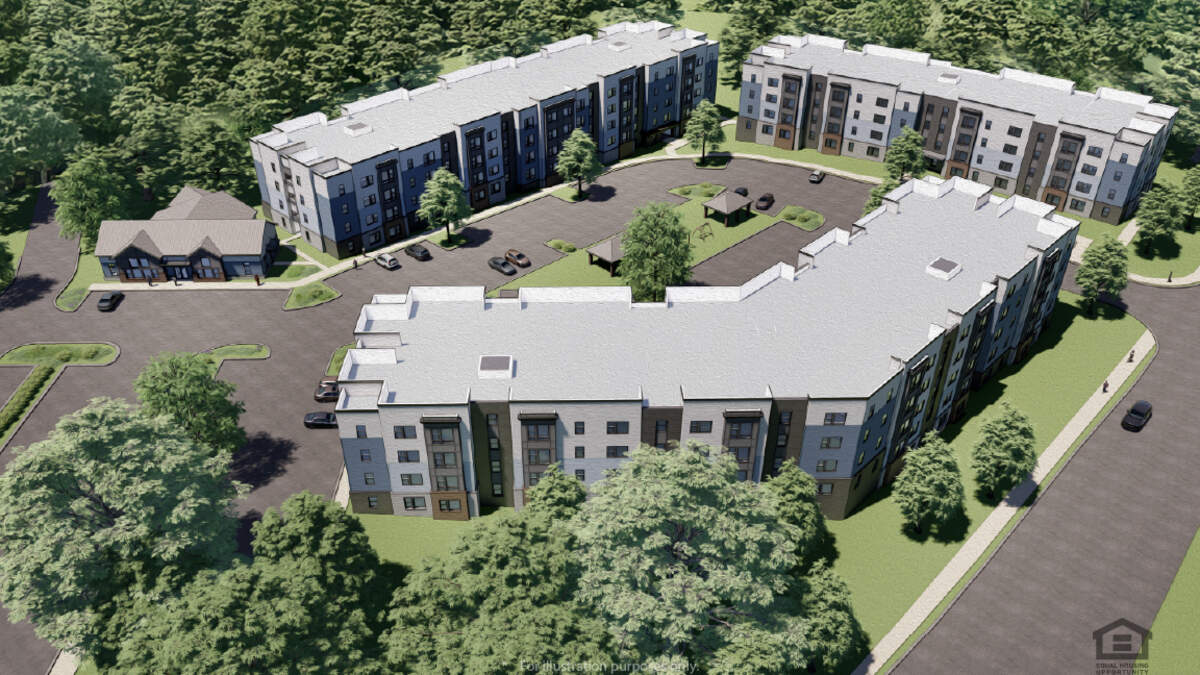
Led by Harmony Housing Affordable Development (HHAD), Gilbane Development and F7 International Development — which together comprise Raleigh Community Partners LLC — the Chapanoke development is under construction at 326 Chapanoke Road in one of South Raleigh’s fastest-growing corridors.
It sits adjacent to Wake Tech’s Public Safety Education Campus and steps from the future Southern Wake Bus Rapid Transit line. Set to deliver in early 2028, it will offer one-, two-, and three-bedroom apartments for households earning between 30% and 70% of area median income (AMI).
That’s between $27,900 and $65,030 a year for a single person, and $39,800 and $92,890 a year for a family of four, according to the U.S. Department of Housing and Urban Development.
Officials say the $93 million project reflects “years of coordination” between Wake County, the City of Raleigh and Wake Tech Community College to convert publicly owned land into affordable housing near transit, education, and jobs. It comes at a time when the Triangle’s rapid growth continues to push housing costs higher and squeeze out lower- and middle-income families.
“Ensuring that Wake County residents can benefit from our growth regardless of their income level is a key priority,” added Mark Perlman, deputy director of Wake County’s Housing Affordability and Community Revitalization Department.
He noted the project’s potential impact on Wake Tech students, who will now have access to “stable, affordable housing” near campus.
Read more Some UNC-Chapel Hill trustees believe they overstep their authority. What they said
Wake County contributed the land and $7.1 million in gap financing.
That includes Low Income Housing Tax Credit equity from Greystone Real Estate Capital; private construction and permanent financing from Greystone Housing Impact Investors LP and Citi Community Capital; and subordinate loans from Wake County and the City of Raleigh.
Developers say these kinds of layered financing structures — once considered complicated exceptions — are now the norm for getting affordable housing built in high-growth regions like the Triangle.
“Chapanoke demonstrates what is possible when public agencies, local governments, and private partners work together with a shared commitment to expanding housing opportunity,” Tanya Eastwood, HHAD’s president, said in a press release.
Several other major affordable housing projects in Raleigh, Durham and the broader Triangle have relied on public–private partnerships, combining city or county land, local loans, tax credits and private developers.
Among them: Raleigh’s 100-unit King’s Ridge, developed by CASA and 120-unit Beacon Ridge, developed DHIC; Durham’s 82-unit Willard Street Apartments developed by Self-Help; and Chapel Hill’s 87-unit Homestead Gardens, developed by Habitat for Humanity of Orange County.
Read more Triangle restaurateur defines success in smiles, not sales. Here’s his new Indian spot.
This story was originally published July 30, 2026 at 7:00 AM.