
AI-generated summary reviewed by our newsroom.
Changes are coming that could result in Wake County students spending less time on school computers and teachers getting more control over what’s accessed online in class.
Read more NC Chinese Lantern Festival lights up Cary. How to go and what makes it special
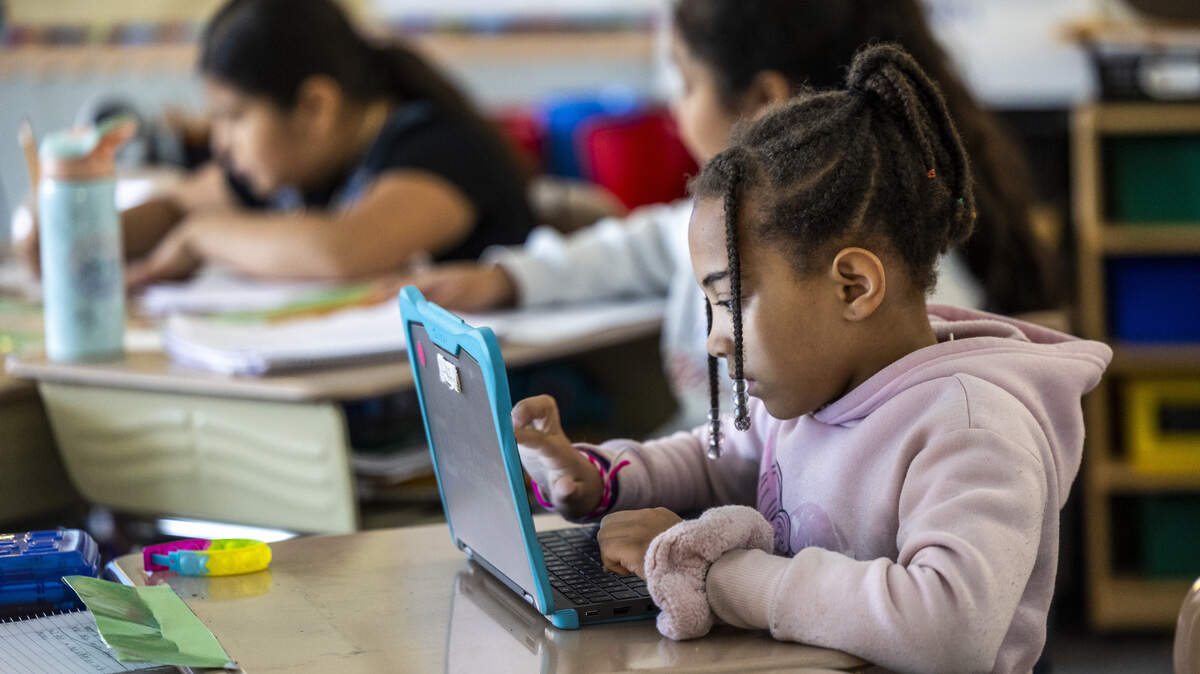
The Wake County school board on Tuesday discussed a recommendation to require all elementary school students to leave their district-issued Chromebook laptops at school, starting next school year. Wake may also expand that policy to ban middle school students from taking their Chromebooks home.
Other recommendations include piloting programs to reduce the number of Chromebooks in K-2 and giving middle school and high school teachers more control over what students can access on their devices.
“How do we balance the need for technology to access content and build digital literacy while recognizing the impacts of screen time and the constraints of limited resources?” Wake says in its presentation.
Tuesday’s board discussion comes ahead of a planned Dec. 1 vote on how many Chromebooks Wake should continue to buy for students.
Before 2020, few school districts across North Carolina and the nation provided computers for every student to take home with them.
But things changed when schools switched to online instruction during the pandemic. Schools used one-time federal COVID relief aid to purchase devices, usually Chromebooks, to give to students to use at home.
Some Wake students have launched a “Notebooks, Not Chrombebooks” campaign urging Wake to cut back on computer use in favor of going back to pen and paper. A district survey found most Wake middle school and high school students spend 90 minutes a day in class on their Chromebooks.
“I plead with you to please remove all devices in all elementary schools and limit their reliance on devices in middle school and high school,” Raj Murthy, a 4th-grade student at Highcroft Drive Elementary School in Cary, told a school board’s student achievement committee on Oct. 27.
Wake said devices are needed in school for things such as student testing. They also said it’s highly unlikely that textbook publishers will go back to printing physical books when they can save money by only doing digital versions.
“There’s this idea out there that’s floating that we can just ditch digital learning, and that is not the case for various reasons,” board member Christina Gordon said at the Oct. 27 meeting.
Superintendent Robert Taylor said it’s all about finding the right balance of how much technology to use.
“I don’t want you to come into an elementary school and we have no technology,” Taylor said at the Oct. 27 meeting. “I don’t want you to come into an elementary school and technology dominates everything.”
Wake gives students a new device every three years. But it’s not cheap. This school year alone, Wake spent $14.9 million to buy 40,000 new Chromebooks for grades 3, 6 and 9.
Currently, only students in grades 3 through 12 take their devices home with them. Students have used their Chromebooks at home during the remote learning that Wake has used when schools were closed due to winter storms.
Students in grades K-2 leave their Chromebooks on campus. Administrators are recommending extending that to all elementary school grades beginning in July.
Read more UNC basketball starting guard Neo Avdalas is sidelined. The latest on his injury
Wake estimates it could save $4.7 million a year from damaged and lost Chromebooks if elementary school students didn’t take the devices home.
Wake says the majority of the elementary school principals who took part in a district survey said they supported the change. Two-thirds of the elementary principals in the survey said Chromebooks typically stay at school already.
If this change is made, principals would have the authority to allow students to take devices home. But typically, elementary school teachers who assign homework or practice activities that require Chromebooks will need to plan for options that don’t require the devices.
“This recommendation will improve the balance of device use outside of school hours and allow families the opportunity to set the priority of access to technology for our youngest learners,” Wake says in the presentation.
Wake says it will also study the feasibility of having middle school students keep their Chromebooks on campus. The feasibility study would be done next school year before any pilot program might be considered for the 2028-29 school year.
Another potential change could reduce how often K-2 students are using Chromebooks in school.
Highcroft Elementary is piloting a program in which K-2 classes share devices instead of each child having their own Chromebook. The classes alternate which days they use the Chromebooks.
“We are not using devices very often,” Katherine Shearin, Hightcroft’s principal, told the board on Oct. 27.
On Tuesday, administrators plan to recommend five to eight more elementary schools pilot the sharing of Chromebooks in K-2 classes for next school year. The intention would be to expand it districtwide in the 2028-29 school year.
“K-2 devices are not planned for procurement until 2028-2029,” according to Wake’s presentation. “This gives the district time to determine the best strategy for a reduced technology instructional model for elementary students.”
Two other recommendations scheduled to be presented Tuesday are to have at least five middle schools and two high schools pilot the use of a “classroom management application” for the fall 2027 semester.
Classroom management applications allow teachers to control access to internet connectivity and specific websites. The application would also allow teachers to monitor students website activity “to redirect when needed.”
The pilot could go districtwide in the 2028-29 school year.
The pilot would come after a district survey found that 54% of middle school teachers and 52% of the high school teachers said they often they find themselves competing with the device for student attention during direct instruction.
There are currently filters in place that are supposed to limit what students can access on their Chromebooks. But multiple students told the board that their peers have found ways to bypass them.
“Instead of help helping kids focus, technology often distracts students,” said Tejaswi Yeddula, a sixth-grade student at Mills Park Middle School in Cary. “Students are often on other games and are not productive in class. School is where we are supposed to build connections, but instead we have devices that foster distractions.”
Read more Possible measles case flagged at NC church, doctor’s office. Exposure locations
This story was originally published November 16, 2026 at 3:32 PM.