
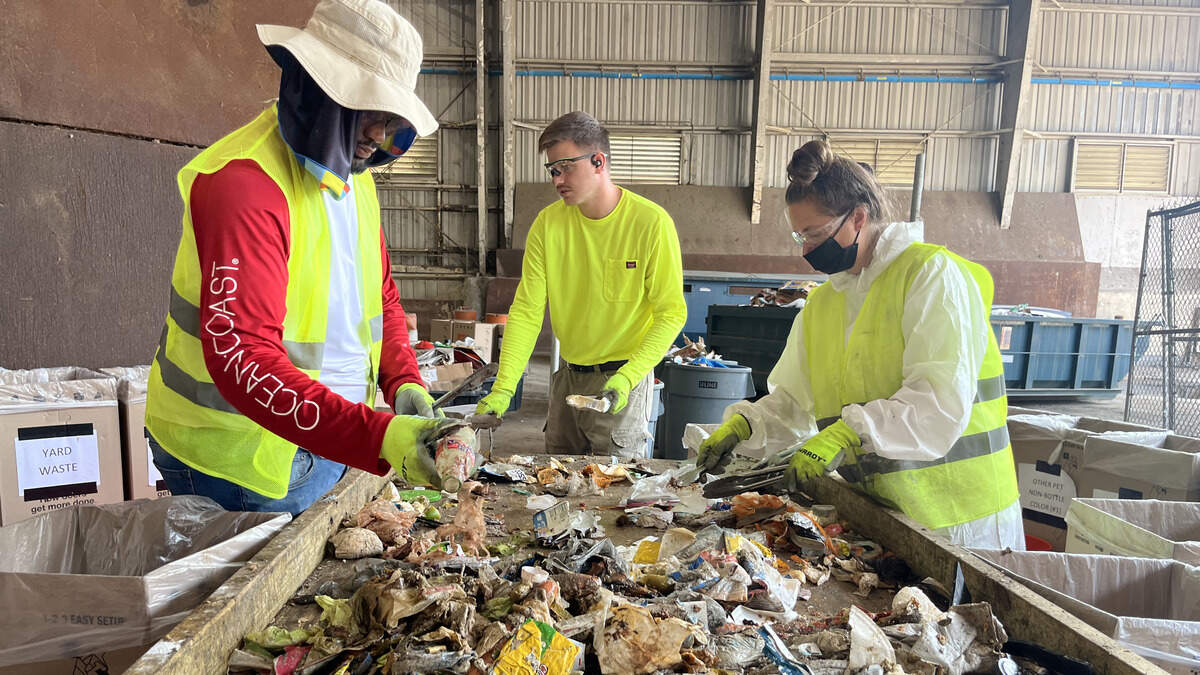
Inside a cavernous warehouse at Durham’s waste and recycling center, a crew of sanitation workers in yellow vests sorted through loads of garbage, collected from homes across the city that Wednesday morning.
Read more Triangle teen paralyzed after diving off uncovered pool platform. Who’s to blame?
They placed each item into one of nearly 30 bins, labeled by what type of plastic, cardboard or aluminum it’s made of. A few things in the trash, they said, could’ve gone into the recycling — an empty bottle of laundry detergent, an Amazon shipping box.
Tossing recyclables into the trash might seem convenient, but as North Carolina’s landfills are running dangerously low on space, it’s becoming a bigger problem, said Muriel Williman, Durham’s senior assistant solid waste manager.
“People don’t really understand what the impacts of throwing recyclables away in the landfills are, and I can tell you that we’re facing a landfill crisis in North Carolina,” Williman said. “The capacity of all the landfills collectively is only 20 years.”
Over the past few years, Tropical Storm Helene and other storms have inundated some of North Carolina’s landfills with flood water, pushing more towns to bring their garbage to a shrinking number of landfills.
And when trash piles up in recycling bins, that can drive up the cost of already-pricey contracts that cities like Durham have to negotiate with recycling processors.
That’s part of why sanitation workers were picking through piles of garbage at Durham’s waste and recycling facility on Wednesday. For the first time in over 10 years, the city is studying t how much trash is ending up in recycling bins — and how much recycling is ending up in trash cans.
Williman said she hopes the results of the study will help the city figure out how its residents can better sort their waste.
“You learn a lot about how much people [are] wasting that could be recycled,” said Randy Goldston, a maintenance assistant for the city of Durham.
When Durham last studied the matter in 2016, it found that about two-thirds of trash coming from city homes could be diverted from landfills. Nearly 28% of it was food waste, and another 27% of it could’ve been recycled.
Read more Why Salley Carson Is ‘Nervous’ to Film ‘Summer House’ Season 11 Cameo
Now, all of Durham’s garbage goes to a landfill in Sampson County, one of the largest landfills in North Carolina that’s about 95 miles south of Durham. To manage its recycling, Durham contracts with Waste Management, a private company that sorts recycling at a facility in Raleigh and then sells materials for reuse.
Yet the Sampson County landfill is running out of space; Williman said it has enough space to keep storing waste for another 15 to 20 years.
“That seems like a long time, but bear in mind … cycles are long in local government,” Williman said. “Everything moves slowly, and you cannot site and build a landfill in North Carolina. There’s very strong political resistance to it, local resistance to it.”
Recycling as much as possible could be a way to keep the state’s landfills open a bit longer. At recycling centers like the one run by Waste Management in Raleigh, items are sorted based on what material they’re made out of and then sold to be reused.
“When trash gets mixed in with those recycling, that is going to cost the [facility] because they have to separate out what is not saleable and discard it,” Williman said.
A 2024 city audit found that nearly a third of Durham’s recycling stream consisted of trash. The city’s goal is to get that rate down to 15%, though that rate of contamination in the recycling remained the same throughout 2023 and 2024, the audit found.
The results of Durham’s latest study will be released in about two months. The city contracted with a consultant group, Kessler Consulting, to sort through its trash; such a contract can cost from $40,000 to $80,000, one sanitation worker said. To sort the recycling, the city is working with a nonprofit that covers most of the costs itself.
This story is available free to all readers thanks to financial support from the Hartfield Foundation and Green South Foundation, in partnership with Journalism Funding Partners, as part of an independent journalism fellowship program. The N&O maintains full editorial control of the work. If you would like to help support local journalism, please consider a digital subscription, which you can get here.
Read more A beloved Texas doughnut shop is expanding to the Triangle for the first time