
AI-generated summary reviewed by our newsroom.
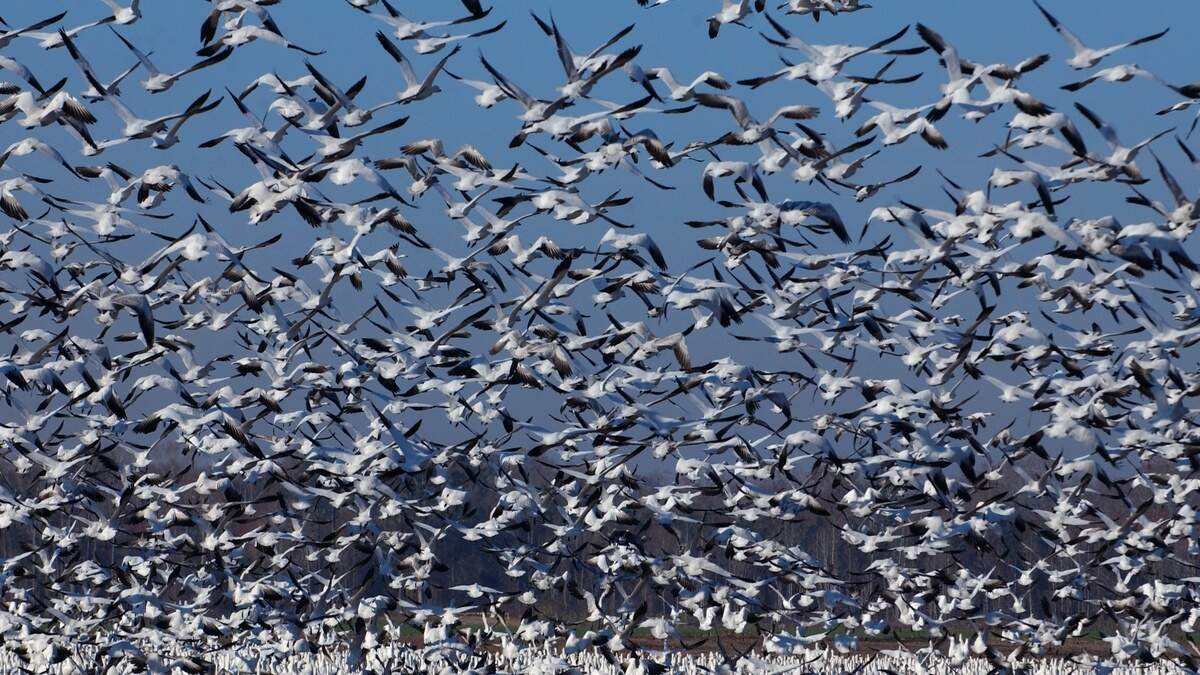
Monitoring thousands of tundra swans, snow geese and other waterfowl that flock to Eastern North Carolina is among Wendy Stanton’s fondest memories of working at the state’s wildlife refuges. Conserving federal lands and maintaining endangered and at-risk animal populations was more than work, she said. It was a way of living.
Read more Durham firefighters set social media on fire in viral ‘walk-up music’ video
In the two years since Stanton retired from the U.S. Fish and Wildlife Service, wildlife and habitat conservation efforts across more than 400,000 acres in the state have grown increasingly difficult for employees as chronic staffing and funding shortages makes meeting federal standards a challenge.
Advocates in North Carolina say there are not nearly enough staff to keep up with land maintenance and restoration, which could put visitors and conservation efforts in danger. They contend that without enough workers at these lands that are federally designated for wildlife conservation, recreation and research, refuges are at greater risk of destructive wildfires, illegal activity and wildlife poaching.
Ten of North Carolina’s 11 wildlife refuges are classified as having insufficient resources, putting them one step away from closure, according to data from 2025 from the National Wildlife Refuge System. But North Carolina isn’t alone.
Not one of the nation’s 573 wildlife refuges have “full required resources.” And more than half have insufficient resources.
“They’re just doing the best they can. I consider it almost like a survival mode moving forward,” Stanton, a retired wildlife biologist and refuge manager, said in a phone interview with The News & Observer.
If refuges close, visitors could be prevented from accessing parts or all of the refuge and would eliminate support like visitors centers.
National and state wildlife advocacy organizations say that North Carolina has fewer than a dozen employees to manage the lands that are more than two times the size of Charlotte. And their tasks range from handling machinery to habitat maintenance to administrative work — all tasks meant for different roles.
The N&O contacted the Department of Interior, which oversees the National Wildlife Refuge System, to confirm the number of employees at North Carolina’s refuges. A spokesperson said in an emailed statement that the U.S. Fish and Wildlife Service “does not comment on personnel but continues to manage its workforce and visitor services to keep public lands open, safe and accessible.”
The limited staff and budget has caused the state’s refuges to rely on the help of volunteers to maintain their conservation and protection of wildlife, educational value and safety protocols, advocates said.
“One of the — if not the biggest problems we’ve been seeing for the National Wildlife Refuge System across the country — is the staffing situation and long-term loss of the number of staff,” said Nathan Marcy, senior federal lands policy analyst at Defenders of Wildlife.
Marcy said that the agency’s decades-long staffing loss was compounded by the Trump administration pushing out large numbers of staff.
When President Donald Trump took office for a second term, he immediately imposed a hiring freeze across most federal agencies and departments. The freeze was lifted last December.
The administration also cut thousands of federal jobs and offered workers resignation and retirement incentives through its Department of Government Efficiency initiative, causing North Carolina’s wildlife refuges to see even more turnover and leaving behind vacant positions, Marcy said.
The service lost 18% of its staff nationwide in 2025, according to data obtained by the Center for Biological Diversity.
Marcy said that these vacancies caused refuges to lose a slew of institutional knowledge. DOGE cuts were “significantly more damaging” to staffing he said, because they pushed out employees without a proper recovery plan.
The N&O reached out to several current employees for interviews and did not receive responses. Former employees and advocacy groups told The N&O that these workers are ordered not to speak to the press.
Twenty U.S. senators, 19 Democrats and one independent, raised concerns of underfunding to Interior Secretary Doug Burgum and U.S. Fish and Wildlife Service Director Brian Nesvik in a 2025 letter, calling refuges’ limited management capacity and loss of institutional knowledge a “crisis.”
In May, North Carolina Democratic Reps. Valerie Foushee and Don Davis both visited the Pocosin Lakes Wildlife Refuge to discuss the refuge workers’ success in conserving Red wolves, the world’s rarest canid.
Davis, who represents the state’s northeastern corner, said in a press release that his visit was a “powerful reminder of the responsibility we share to protect and preserve our environment for future generations.”
“Eastern North Carolina’s wildlife refuges protect our natural resources, support outdoor traditions, and help drive the tourism that sustains local businesses and jobs,” Davis told The N&O in a statement.
“Dedicated volunteers play an invaluable role, but they shouldn’t have to shoulder this alone. Trained staff and reliable federal resources are needed to keep these public lands operating safely and effectively,” he said.
Without consistent land maintenance, refuges, and the wildlife that live in them, could be at risk for disastrous wildfires.
This is especially a concern for refuges on the coast, like Pocosin Lakes, that have peatlands, which are areas of land that accumulate organic matter faster than it decomposes, giving fires ample fuel when it dries.
Firefighters need roads that allow for efficient transportation. But workers are stretched thin to keep up road maintenance.
“They just don’t have the ability to do the work they used to do. So they just have to … triage and prioritize and do less,” said Michael Bryant, a former wildlife refuge manager who retired in 2016. “It’s stressful to not accomplish what you used to be able to accomplish when you had the resources to do it. It brings disappointment.”
Read more Former FBI head James Comey alleges Trump vendetta in bid to dismiss ‘86 47’ seashell case
Preparing for wildfires has become more difficult since oversight of firefighter staff has been removed and given from the Fish and Wildlife Service and transferred to the U.S. Wildland Fire Service in February after it was created in January. These workers would typically employ prescribed burns, or controlled fires that reduce harmful fuels that could help kindle wildfires. But these firefighters share management responsibilities across five other bureaus and offices.
If these lands are harmed, communities could lose key clean water sources and money generated by the tourism that refuges attract.
“All these things are borne on the shoulders of a significant federal workforce that’s out there stewarding these landscapes, protecting these wildlife (and) managing these resources for the public good,” Ben Prater, southeast program director at Defenders of Wildlife, told The N&O.
North Carolina Wildlife Federation CEO Tim Gestwicki said that protecting these federal lands by supporting workers is crucial, especially in a rapidly growing state where 80% of land is privately owned.
“They are pushed to the brink right now … They need support. They deserve support,” Gestwicki said.
The federation has an agreement with the fish and wildlife service to run the Red Wolf Education Center, which previously closed because of personnel shortages.
Laura Neitzey, conservation manager at the federation, said that volunteers are key to maintaining the land, conducting habitat restoration projects and running educational and outreach programs.
Volunteers at Pocosin Lakes Wildlife Refuge have installed educational panels, removed invasive plant species and installed native educational pollinator gardens, which provide food and shelter for wildlife. In the past, some volunteers have helped transport heavy machinery.
“Usually (wildlife refuge workers are) just grateful for every ounce of support (they) can get,” Neitzey said. “It brings them joy to see that there are people that also believe in the same mission and the same causes that they believe in — that they’re willing to give their time for free … and support the limited refuge staff capacity that we have.”
In many cases, facilities like visitor centers and restrooms are only open because of volunteer work.
Neitzey said most volunteers are retirees, but they also receive help from school groups, college interns and families. Retired refuge workers often return as volunteers, too.
Some volunteers even live on the refuge for several months to volunteer and are compensated through their lodging.
“Working on refuges has been such a part of my whole family’s lives,” said Stanton, who still volunteers two years after retirement. “Every member of my family got recruited or drafted to be a volunteer.”
Howard Phillips said that as the Southeast representative at the National Wildlife Refuge Association, he has helped the employees with projects that are taking longer than they should. One of the projects, he said, he wrote the plan for just before he retired more than five years ago.
When Bryant began working in the refuge system in North Carolina in 1996, he managed Alligator River and Pea Island wildlife refuges on the coast, among the state’s largest. But as fiscal constraints grew over time, he ended his career managing six refuges.
Phillips, a former refuge manager at Pocosin Lakes, said that a project he managed to restore wetlands in priority areas should have only taken roughly three years. Instead, it took more than 20. The delay, he said, came from receiving money in stages “with whatever funding we could find” rather than all at once.
“We’ve always been short-staffed,” he said. “We always kind of joked about ‘refuges could fix anything with baling wire and duct tape.’ And that’s kind of what we did. A lot of the time, we would find a way to make things work.”
Though he doesn’t recall employees complaining about pay, Phillips said that he and other employees worked well over their intended hours to keep up with the workload.
In his retirement, Phillips still stays connected to current staff.
Though Stanton retired in 2024, she, too, stays connected with staff, former colleagues and volunteers. She feels so connected to them that she still uses the word “we” when describing the work of refuge workers and volunteers.
“If you were to look in my house … everything we have in here has some type of photo from refuges,” Stanton said. “It’s like a calling. It still breaks my heart to see what my friends and colleagues are going through.”
Stanton said that she tells her friends who still work on a refuge not to “work themselves to death.” She said that the overwhelming workload makes her concerned for their mental health.
“So many of the team have this very high bar, and it’s not humanly possible to meet that bar,” Stanton said. “And it’s hard to lower that bar when you’re used to performing at a very high excellency level.”
Though current Fish and Wildlife Service employees have told Bryant that they don’t have enough resources to meet federal expectations, they continue to adapt.
“To love your work and to want to get it done no matter what … it creates stress and creates disappointment and disillusionment, but not enough to make them say, ‘I’m giving this thing up.’”
Read more Carolina North offers UNC ‘opportunity’ – if it complies with philosophy prof’s will